Browsers run on people, not data centers.
SPIDERNET is the people-powered headless browser farm. Workers run idle Chrome on their home internet and earn USDC. Agents pay $0.001 per page instead of $0.10. No data center sits in the middle.
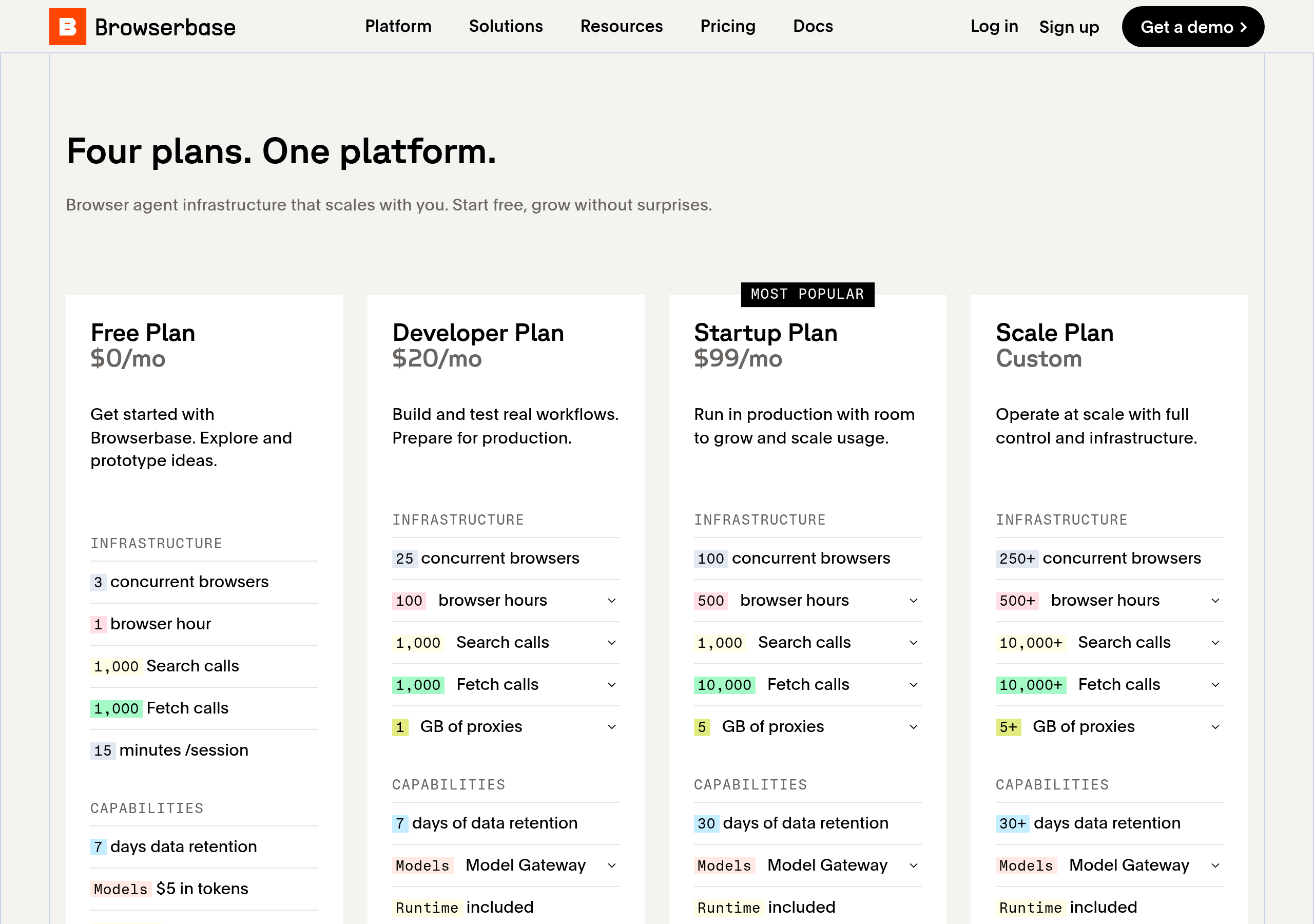
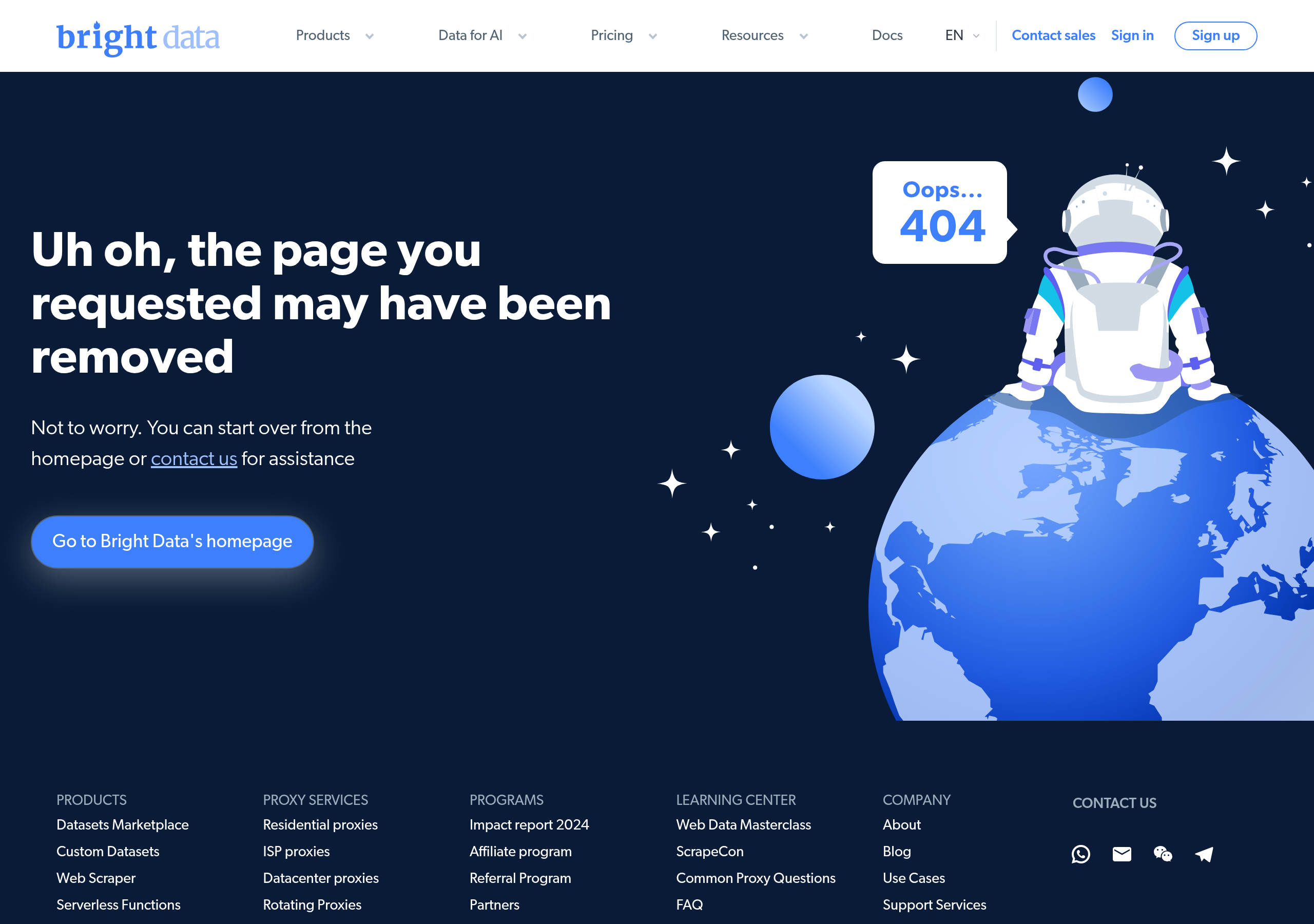
Every AI agent that books a flight, fills a form, reads a paywalled article or scrapes a SERP needs a real browser. Today that browser lives on AWS, and four companies charge what AWS costs. The result: rendering one page costs more than the LLM call that decided to render it.
Sources: browserbase.com, brightdata.com pricing pages, 2026-06-04. SPIDERNET rate is the network floor; routing premium adds 0-30% on tight geos.
The pricing numbers on the table aren't from a press release. We routed jobs through three random SPIDERNET workers, opened the competitors' own pricing pages, captured what they currently charge. The receipts are below. Click any one to see the source URL.
Captured 2026-06-04 23:24 UTC through the public SPIDERNET gateway. Try it yourself below.
Paste any URL. The job leaves your browser, routes to the closest SPIDERNET worker, the worker opens Chrome, takes a screenshot and returns it. No data center in the middle. Free 50 renders per day from the public gateway.
# the same call from your agent curl -X POST https://api.spidernet.io/v1/render \ -H "Authorization: Bearer $SPIDER_KEY" \ -d '{"url":"https://news.ycombinator.com","wait":"load","return":"png"}' # response { "worker": "jp-osaka-#421", "rtt_ms": 890, "cost_usdc": 0.001, "png": "data:image/png;base64,iVBORw0K..." }
SPIDERNET is the routing layer between AI agents that need a browser and humans that have idle compute. The contract handles payment, slashing, and the 80/20 split. The network handles geography and trust.
It boots a headless Chromium when your machine is idle. 2 GB RAM is enough. The client signs jobs with your wallet so the contract knows who to pay.
One endpoint: /v1/render. Pass a URL, a wait condition, an XPath if you need it. The gateway batches micropayments so you settle in USDC, not gas.
The router picks a worker close to the target, with a clean rep, and the right Chrome version. If the worker fails, the job retries on the next best. The user never sees it.
USDC settles per epoch. Treasury sweeps every 24h: 50% buys $SPIDER on the market and burns it, 50% goes to $SPIDER stakers as USDC.
SPIDERNET pays you to point that nothing at a Chrome window. The client is opt-in, sandboxed and capped: you set the hours, the bandwidth, and which sites you'd rather skip.
$SPIDER is the routing and revenue token. The contract is open-source and the supply is on-chain. No team allocation, no VC bag, no unlocks waiting to dump on you. 100% in the pump.fun bonding curve.
Single mint. No mint authority. No team wallet. No KOL allocation. The dev's seed buy is whatever the curve costs in the first block, same as you.
The gateway takes 20% of every job. Half of that buys $SPIDER off the market and burns it, half is paid as USDC to people staking $SPIDER. Network usage = sustained buy pressure and real yield.
# revenue example, conservative scenario gateway throughput = 14,902 pages / min # live average job price = $0.00126 monthly gross = $808,000 worker share (80%) = $646,000 treasury margin (20%)= $162,000 → buy & burn = $81,000 / mo # open-market → staker yield = $81,000 / mo # USDC
The site you're on. Render any URL through a public worker, see the screenshot, see the latency.
Full 1B supply hits the bonding curve. No allocations. CA pinned in the bar above the second it's live.
Signed installer, opt-in throttling, USDC payout per epoch. Closed beta with the first 500 stakers, public after that.
Native bindings for Claude Agent SDK, OpenAI Agents and Mastra. Per-token billing in USDC. First gateway customers go live.
Logged-in workflows. Worker carries a sandboxed profile, agent rents the session by the minute. Replaces Browserbase's premium tier at one-tenth the price.
Two reasons. First, cost: a home laptop's headless Chrome session costs the worker close to zero (electricity), where a Browserbase session costs them $0.05+ in AWS time. We pay the worker $0.001 and everyone wins. Second, residential IP: the web increasingly distrusts data center IPs. A home connection in Osaka is the only way to render the Japanese Amazon page the way a person sees it.
Workers vote on blocked domains by default (CSAM, malware-known hosts). Premium routes (logged-in, banking, adult) are opt-in per worker. The contract slashes workers who return mismatched hashes for the same URL at the same time, which catches the "fake-render to earn" attack.
Nothing technically, but the moat isn't code, it's the workers. We pay 80% of revenue to people running idle browsers. Whoever owns the supply side at the moment AI agents go mass-market owns this category. We're going to that side first, hard.
A 2026 worker on a 100 Mbps home line renders ~2,800 pages per CPU-hour. At $0.001 per page that's $2.80/hr to the worker, comfortably above the global remote median for ambient compute. The gateway takes $0.00025 on top. Margins compress as the network scales but the worker share stays at 80% by contract.
One operator, fair-launched, no allocation. The dev's seed buy is whatever they pay on the bonding curve in the first block, posted publicly via the CA bar at the top of this page. Everything else is open-source the day after launch.
Do it. The free public gateway gives you 50 renders per day, no signup. The paid API takes USDC, not $SPIDER. The token is for people who want to capture the revenue, not pay for the service.